
How Sault Arrests Work
Inside the city limits, the Sault Ste. Marie Police Department does most of the arresting. It runs full-service law enforcement around the clock with 24 sworn officers, plus clerks, auxiliary staff, and school crossing guards. Michigan's own population material put the city at 13,337 residents in 2020. Not every arrest is a city case, though. The Chippewa County Sheriff, state police Post 82, and TRIDENT each bring their own paperwork.
When someone lands at the Chippewa County Correctional Facility, the Booking Office opens the custody record there. The arresting agency keeps its incident report. The court tracks the case afterward. Each record answers a different question.
Where Sault Records Appear
The Sault Police publish no daily arrest list or booking-photo page. Chippewa County posts no public CCCF roster either. A gap online never means no arrest happened.
| Channel | Answer | Status |
|---|---|---|
| Sault Police | City arrest report | Official; no public log verified |
| CCCF Booking Office | Booking and custody | Official; call 906-635-7620 |
| MI-VINE | Custody status and alerts | Official; not a photo gallery |
| MiCOURT | Filed case activity | Official informational search |
| SooLeader | Selected arrest news | Independent and incomplete |
| Aggregators | Possible leads | Unofficial; verify each item |
Go to official sources first. County aggregator sites run stale, duplicate, or plain wrong, and their photos prove nothing about CCCF policy.
Finding Someone Arrested in Sault
Fresh arrests can lag behind transport and booking. CCCF is staffed all day, every day, but it publishes nothing online on that same schedule.
- Identify the likely arresting agency from the location or available release.
- Ask Sault Police Records for a city arrest report, or contact the agency named on the event.
- Call CCCF at 906-635-7620 for a current county-custody question.
- Use VINELink Check for custody status and alerts, allowing for data delay.
- Check MiCOURT after filing, then request the underlying record if online sources do not answer the question.
Bond, release, and court data update on separate clocks. Someone can walk out of CCCF while the police report and court case still sit there. The Chippewa County arrest hub lays out the county's record and photo routes in detail.
Sault Police Record Requests
For a Sault Police incident or arrest report, use the city's FOIA route. Robin R. Troyer is the coordinator, reachable at 906-632-5717 and rtroyer@saultcity.com. Mail or drop requests at City Hall, 225 East Portage Avenue. No special form is needed. The city allows about five working days for a response.
Describe the record you want. Give the person's name, the rough date and place, and a report number if you have one. Copies run $0.10 per page, or $0.50 for color. The schedule sets no booking-photo fee. CCCF may hold the image instead. In that case, send that request through county FOIA.
- Ask for the existing report and its nonexempt portions.
- Specify whether a booking image is sought and direct it to the actual custodian.
- Keep the fee estimate and written response for any follow-up.
401 Hursley Street
Sault Ste. Marie, MI 49783
Records: 906-632-5744
Detectives: 906-632-5750
Monday-Friday, 7:00 a.m.-5:00 p.m.
Sault News Is Selective
SooLeader's crime section carries the most consistent local arrest coverage. One story showed the usual split. Sault Police made the warrant arrests, CCCF lodged the people, and the Sheriff's Office supplied the photo. That is why the sources differ. An arrest report, a booking record, and a news article can each trace to a different source. Remember, it is an article feed, not a roster.
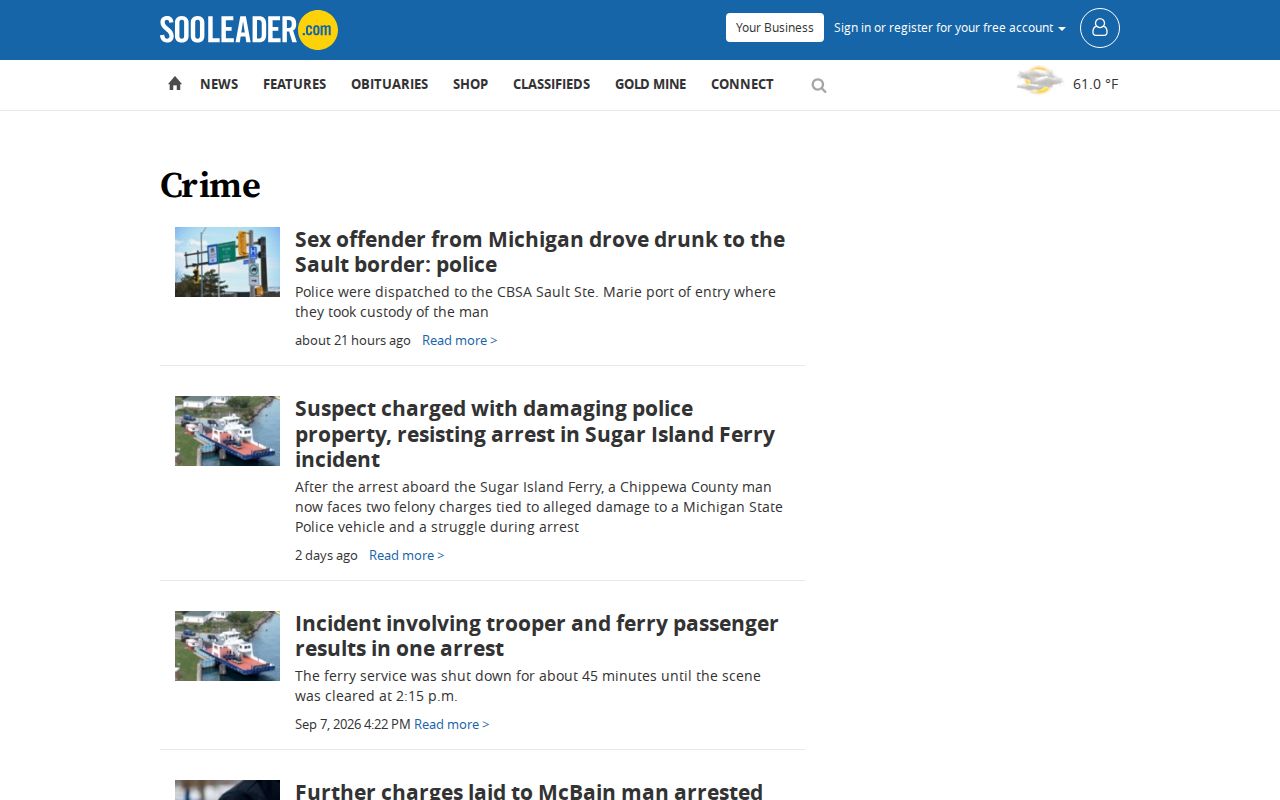
A news page is not a roster or a gallery. The Sault News, WNMU-FM, and 9&10 News also pick selected events, so confirm anything against agency and court records.
Sault Bookings Reach CCCF
The official CCCF page says every lodged person goes through the Booking Office. Staff there answer bail and arraignment questions. There is no public search form. No roster appears. No posting schedule exists, and no booking-photo policy is stated. A direct call to the jail can beat any mirror site for current custody. A retained record or photograph calls for a written county FOIA request.
CCCF is not a prison. It sits apart from MDOC facilities and from federal or immigration custody. OTIS lists state prisoners and people under MDOC supervision, not a fresh city arrest. The county has held ICE detainees too. Immigration questions need the separate ICE locator. One person can cross several systems without them merging into one database.
The facility runs GED classes, counseling, Native American culture studies, work-pass, tether, and community-service programs. None of that implies eligibility or erases the separate arrest and court records.
A custody answer is one stage, not the whole record. A person just booked may still await arraignment. Someone who posts bond can leave the jail. The arrest report stays with Sault Police, and the court case starts moving. Only a later sentence under Michigan Department of Corrections control makes OTIS relevant. It excludes unsentenced county-jail detainees and jail-only sentences. It cannot fill a same-day Sault search.
Photo requests need the same care. Sault Police may hold an incident image or evidence. CCCF may hold the intake photograph in a jail record. Michigan FOIA allows exemptions and redaction. Neither office must release every part of a file. Ask for the nonexempt portion of the record you can identify. An image copied by an independent publisher proves nothing about its source, date, or accuracy.
- Arrest report
- The arresting agency's account of the event and investigation.
- Booking record
- The jail's intake and custody record after lodging.
- Disposition
- The court's final resolution, which may differ from the charge entered at booking.
- Custody alert
- A VINE notice about a reported custody change, subject to system timing.
That first call does not always land in the right place. Police Records handles some questions, while jail custody belongs to CCCF. An incident narrative goes back to the agency that made the arrest. Knowing this saves a round trip. Before you dial, gather a few details. Get the name used at booking, a tight date range, the agency involved, and the exact record type you want. No office will build a summary that does not already exist. Ask for the record itself.
Sault Arrest Jurisdiction Clues
The official incorporated-place table documents Sault Ste. Marie's place in the county map.
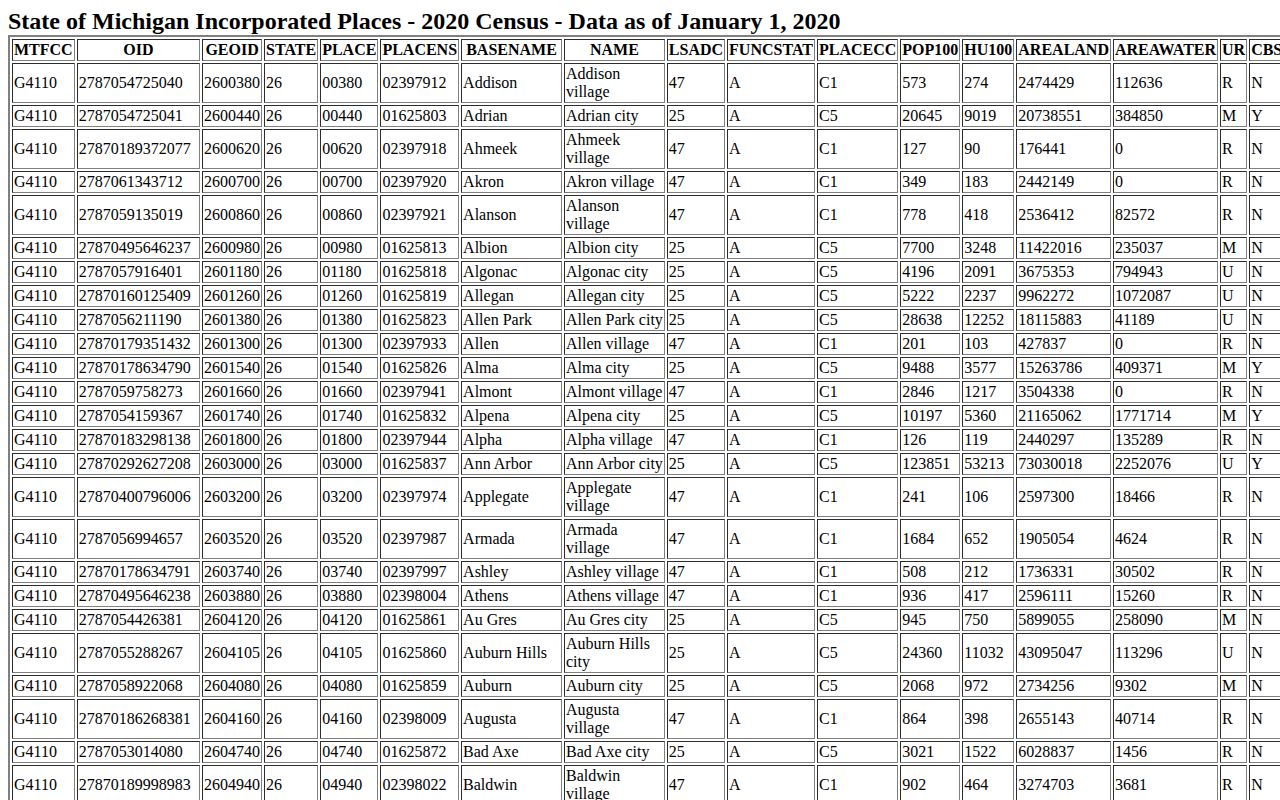
The city's size does not tell you who made an arrest. Sault Ste. Marie packs a lot into one place. It has municipal police, the county Sheriff, state police, courts, and the jail. Location alone never names the custodian. Check the agency listed on the report first. CCCF confirms county intake, MI-VINE tracks custody events, and the court holds the case outcome. That order matters. It keeps a news story or a third-party county label from standing in as the final word.
Similar names call for extra care. Add the approximate arrest date and the agency to any official search. Never assume a match from a shared name or a booking photo. MiCOURT is informational only, so the certified court file is the stronger source for a final result. A missing case in the public search can mean timing or a nonpublic category. It does not mean an arrest record never existed. Juvenile and other protected records stay restricted. Ask each custodian what may lawfully be released, and accept redaction where Michigan law demands it.
Precision separates facts from questions. Agencies release the records they keep. They do not have to write new explanations or custom arrest summaries. Name the document, the date, and the office, and the Sault search gets sharper.